
If you've been using a red light therapy cap for a few months and your progress has flattened, you're not doing it wrong. You're most likely doing half of it.
Photobiomodulation, the science behind every red light hair device, is well documented. Specific wavelengths of light are absorbed by the cells in your hair follicles, raising ATP production and supporting the anagen (growth) phase of the hair cycle. Multiple peer-reviewed studies record a 35-43% improvement in hair density over 16-24 weeks1 using red and near-infrared wavelengths. That's the cap. That's real.
But read the clinical combination protocols closely and a pattern shows up: the strongest, most consistent outcomes rarely come from light alone. They come from light plus a topical applied at the scalp. Two fronts, not one.
The cap works from inside the follicle. A topical serum works from the surface. Most people buy the first, skip the second, and treat one front of a two-front problem.
The Two Fronts, Explained
It helps to picture where each part of the routine actually does its work.

Light, From Within
660nm red and 850nm near-infrared light is absorbed by the follicle's cells, raising ATP and supporting the growth phase. This is the mechanism behind the 35-43% density data, and it's the part the cap handles.
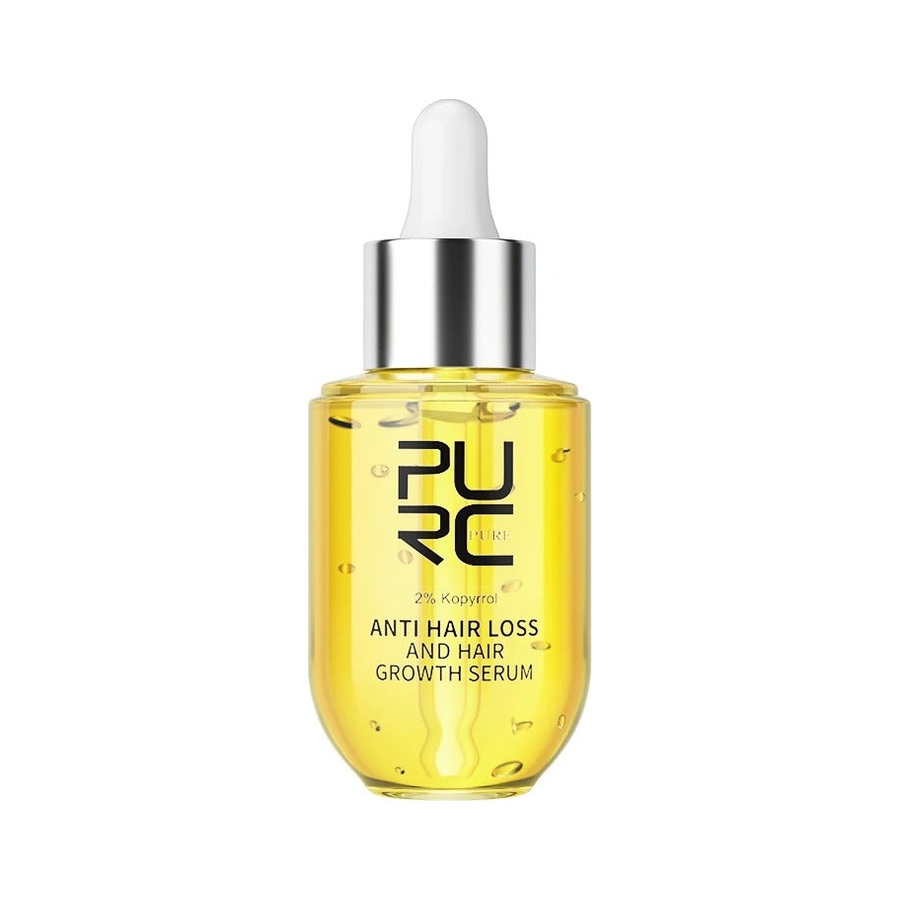
Topical, From the Scalp
A growth serum applied directly to the scalp between sessions nourishes the follicle bed the light is reactivating. It's the surface half of the routine, and it's the part most people never add.
Neither front is a gimmick, and neither replaces the other. Light drives the follicle from within; the serum supports the scalp from the surface. Run only one and you're asking half a routine to do a whole job.
Why "Just the Cap" Plateaus
Here's the trap. The cap is the part with the headline number attached, so it's the part everyone buys. The serum is quiet, unglamorous, and easy to treat as optional. So people skip it, run the cap faithfully for sixteen weeks, see early gains, and then watch the curve flatten.
The flattening isn't proof the light "stopped working." It's what a one-front routine looks like once it hits the ceiling of what one front can do. The fix isn't a stronger cap or a more expensive device. It's the second front you left out.
How We Look at This
Scalp Health Research evaluates hair restoration products on the science behind them and the value they deliver, not on brand or price. We traced the photobiomodulation claims to their peer-reviewed sources and looked specifically at how combination (light + topical) routines are structured. Our consistent finding: the device gets the attention, but the routine that holds up over time runs both fronts. The practical question is whether you have to assemble that yourself, or buy it in one box.
The System We Kept Coming Back To
Most brands sell you the device and stop. A few sell the serum separately, as an upsell you discover later. One puts both in a single box and prices the pair below what one competitor cap costs on its own.


LeDoche HairRevive Complete System
The cap and the serum, together, as one routine. 120 LEDs at 660nm + 850nm for the light front; the LuxeFollicle growth serum for the surface front. Both fronts, one box.
- + Both fronts included — cap + serum
- + 120 LEDs, dual wavelength (660nm + 850nm) — $0.83 per LED
- + The same clinically studied wavelengths as $1,500+ devices
- + 90-day money-back guarantee on the full system
Device Alone vs. The Full Routine
What comparable caps cost: clinical red-light caps that use the same red and near-infrared wavelengths run from about $1,499 to $2,599 for the device alone (see the table below), and none include a growth serum. The Complete System pairs the cap and the LuxeFollicle growth serum for $149, with a 90-day money-back guarantee.
The legacy brands charge a premium for the device and leave the surface front to you. Here's how the structures compare.
| What you get | LeDoche Complete System | iRestore Professional | Capillus Plus |
|---|---|---|---|
| Price | $149 | $1,499 | $2,599 |
| The cap (light front) | 120 LEDs, 660 + 850nm | Yes | 650nm only |
| Growth serum (surface front) | Included | Not included | Not included |
| Dual wavelength | Yes | Yes | No |
| Cost per LED (cap) | $0.83 | $5.32 | $12.87 |
| Guarantee | 90 days | 6 months | 6 months |
Competitor pricing reflects the device only. Adding a comparable growth serum to either is an additional purchase the brands leave to the buyer.
What the Research Actually Says
Two points are worth keeping straight. First, the 35-43% density figure comes from light therapy studies at 630-670nm and 810-850nm, the cap's job, not the serum's. We don't attribute that number to the serum, and neither should anyone selling you one. Second, the serum's role is supportive: nourishing the scalp and follicle bed between sessions so the light has the best surface to work with. The case for running both isn't that each does the same thing twice; it's that they cover different ground.
Results vary based on individual factors and consistent use. The strongest predictor of progress in every study is the same: doing the routine, on schedule, for long enough. A system you'll actually keep up with beats a perfect protocol you abandon.
Frequently Asked Questions
The cap is the core of the routine and the part with the strongest clinical evidence behind it. You can run it alone and many people do. But combination routines, light plus a topical at the scalp, are how the most consistent results tend to be structured in the literature. The serum is the surface front; the cap is the inside front. The system simply puts both in one purchase.
No, and it's important to be clear about that. The 35-43% density improvement comes from red and near-infrared light therapy studies, not from the serum. The serum's role is supportive: it nourishes the scalp and follicle bed between sessions. We don't claim the serum reproduces the light's clinical numbers, and you should be skeptical of anyone who does.
Use the cap for 20 minutes, every other day. Apply the serum to a clean, dry scalp on the days in between, or as directed on the bottle. The two layer into a simple routine: light on session days, serum on the off days. Consistency matters more than intensity.
Most clinical studies document visible changes between 12 and 16 weeks of consistent use, with early signs (reduced shedding) appearing at 8 to 12 weeks. Full visual density improvement generally lands at 16 to 24 weeks. Results vary based on age, genetics, and how consistently you run the routine.
The wavelengths and LED density that drive the results are commercially available technology, not proprietary engineering. Premium devices largely reflect retail distribution, legacy branding, and medical-device marketing overhead, and they sell the device alone. LeDoche sells direct-to-consumer and includes the serum in the system, which is how the pair lands at $149.
The system carries a 90-day money-back guarantee. Run it consistently, and if you don't see meaningful improvement, return it for a full refund. Individual biology varies, which is exactly why the guarantee exists: you can test your own response without financial risk.
The Takeaway
If your red light routine has plateaued, the answer probably isn't a more expensive cap. It's the front you left out. Light works from inside the follicle; a topical serum works from the surface. The routines that hold up run both.
You can assemble that yourself, buying a device from one brand and a serum from another. Or you can get both in one box, at a price below what a single competitor cap costs, with a 90-day guarantee that makes trying it a decision you can reverse.
Run the whole protocol, not half of it.
See the Complete System — $149